The Fine Art of [Harriet Whitney Frishmuth] // 09.30.26
Harriet Whitney Frishmuth
Born in Philadelphia, Pennsylvania, Harriet Whitney Frishmuth (American, 1880 -1980) was a student of such renowned artists as Auguste Rodin (1840-1917) and Gutzon Borglum (1867-1941). Frishmuth's reputation and career grew steadily throughout the first several decades of the twentieth century, with exhibitions at the National Academy of Design, the Academy of Fine Arts in Philadelphia, the Salon in Paris, the Golden Gate International Exposition (1939-1940) and the National Association of Women Painters and Sculptors.
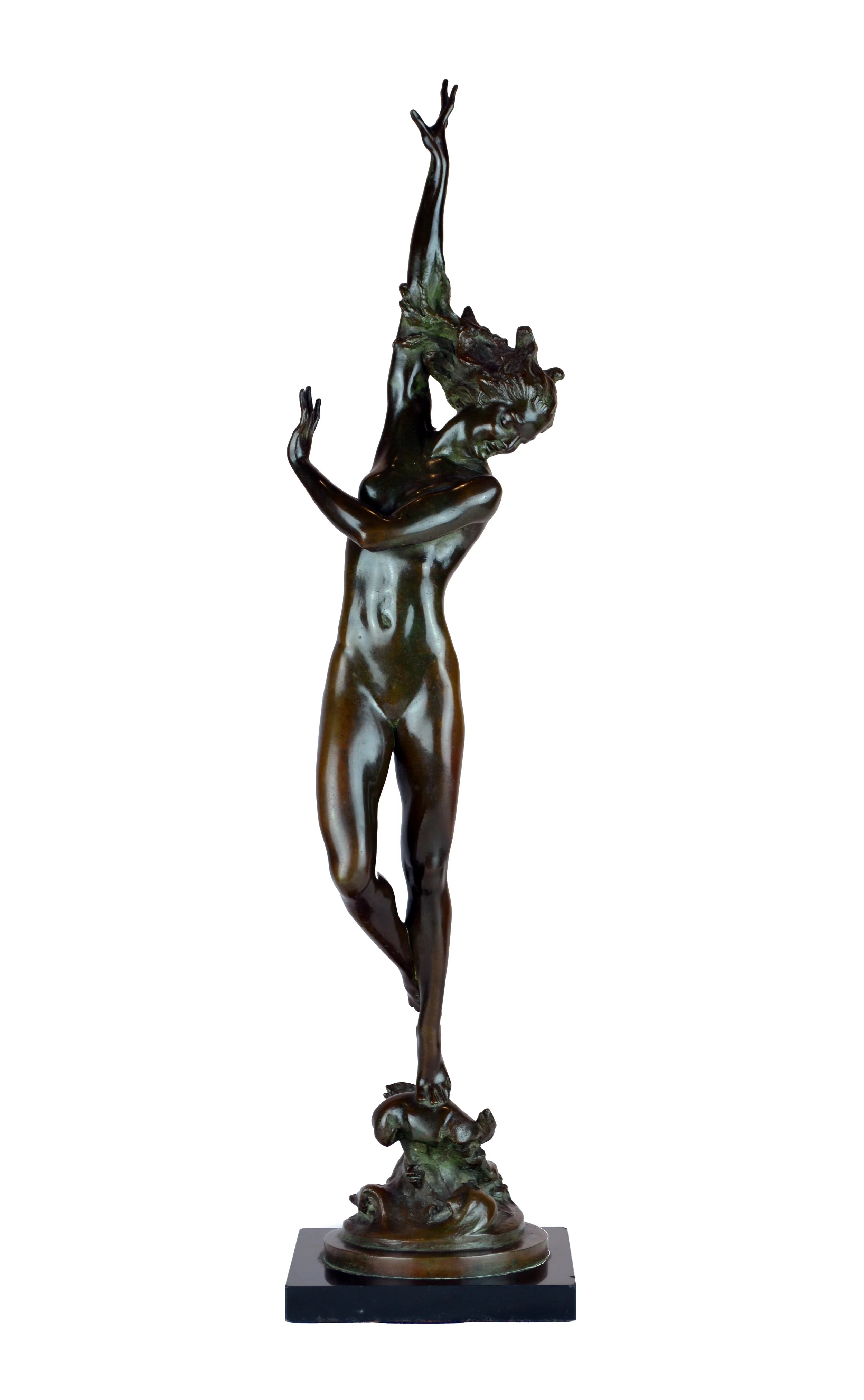
Her favorite models were dancers, especially Desha Delteil (1899-1980) - immortalized in Frishmuth's most famous work, The Vine - a model particularly popular with artists for her ability to hold difficult poses for long periods of time. Crest of the Wave may have been conceived as a study for a commissioned larger version of the same design. The windswept hair and turbulent water create a work at once graceful and powerful. The piece proved to be very popular with casts made between 1926 and 1968.
A proponent of the Beaux Arts style - Frishmuth was exceptionally critical of modern art, often calling it "spiritless" - her works can now be seen in some of the world's leading museums and collections, including the Metropolitan Museum of Art in New York City, the Dallas Museum of Art, and Ohio University's Kennedy Museum of Art.
Harriet Whitney Frishmuth (American, 1880 -1980)
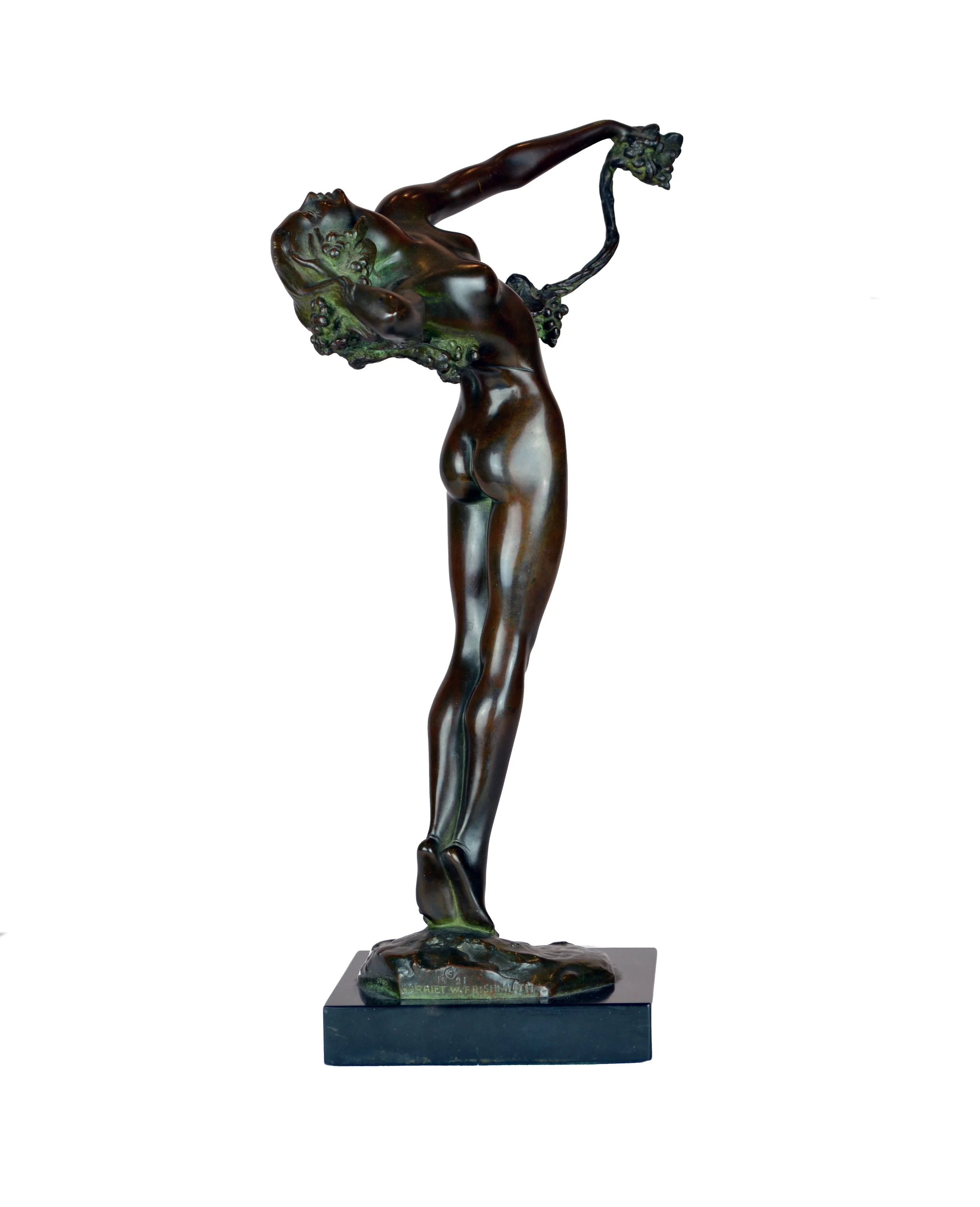
The Vine, 1921
Bronze
11.5 inches (height)
Edition of 396
Harriet Whitney Frishmuth (American, 1880 -1980)
Crest of the Wave, 1925
Bronze
21 inches (height)
Edition of 304
The Fine Art of [Harriet Whitney Frishmuth]// 09.30.2026
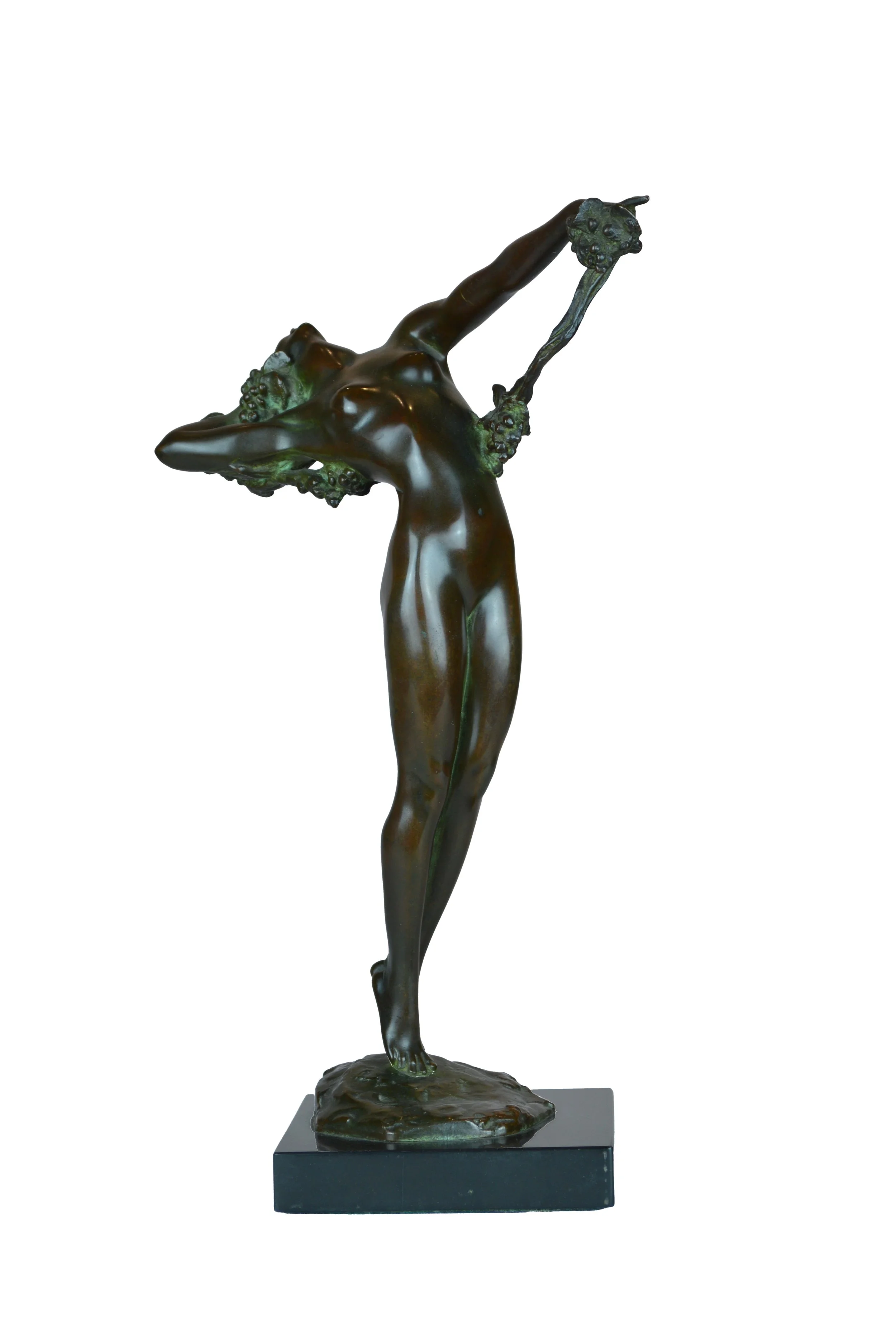
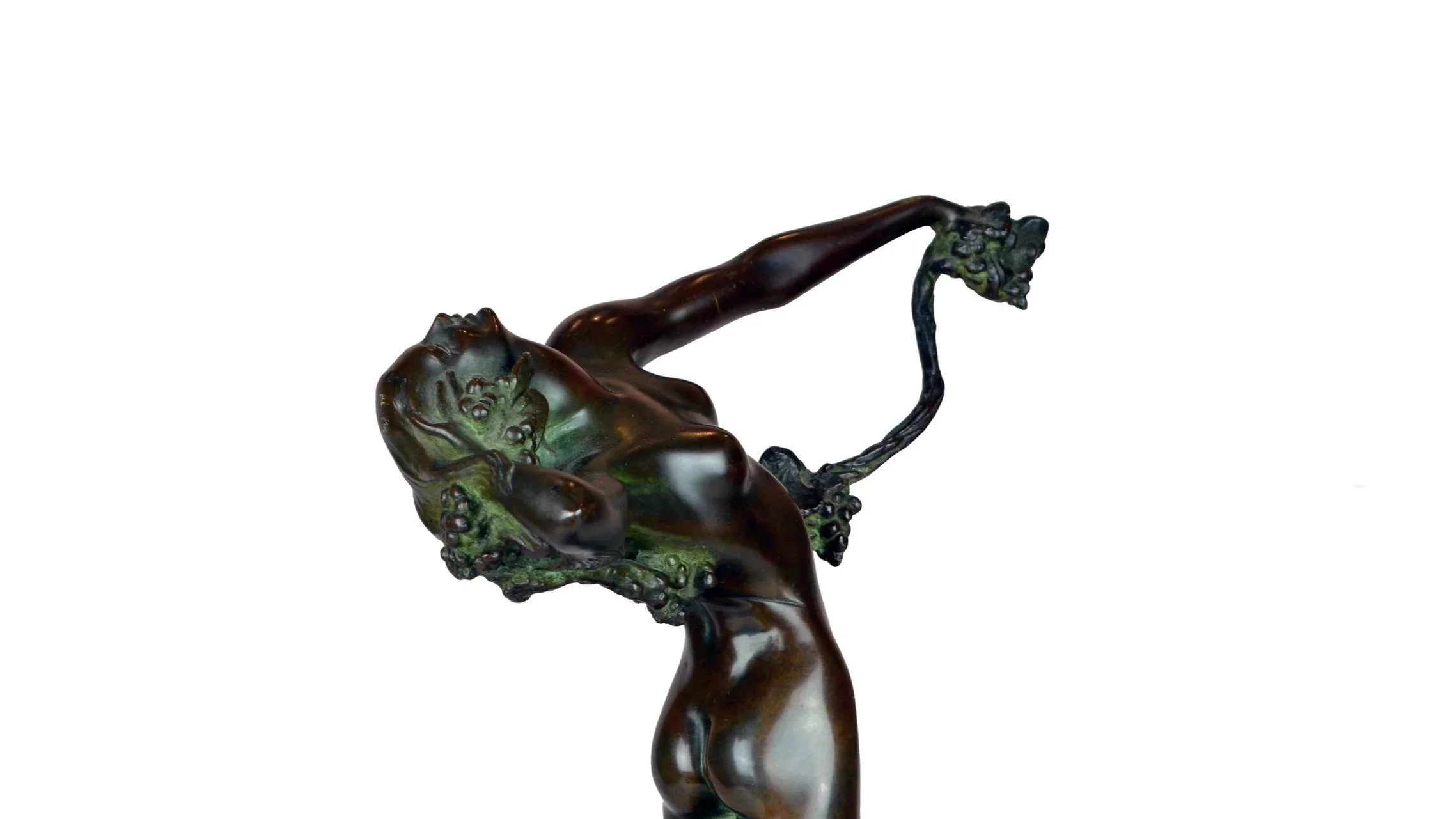
On tiptoe, the figure in Harriet Whitney Frishmuth’s The Vine, stretches out in a dramatic backbend, holding a grapevine between her extended hands. The nude body mirrors the living vine in its taut form. With head tilted back and neck exposed, the posture appears to be one of ecstasy—perhaps an allusion to the revelers of Dionysus, the god of wine.
At a young age, Frishmuth’s mother took her to Europe, where she attended school in Paris and became proficient in several languages. At nineteen, she enrolled at the short-lived Académie Rodin, where she (the only American known to have studied there) took a sculpture modeling class. Twice a week Auguste Rodin (1840-1917) visited the class to critique student work. Later, Frishmuth wouldn’t call herself a student of Rodin since she trained with him so briefly, but her mature sculptures clearly demonstrate the renowned sculptor’s influence on her work in their implied movement and expressive form.
Upon returning to New York, she continued her studies at the Art Students League. Although her teachers encouraged her to open her own studio, the artist, sometimes described as self-effacing, chose instead to spend two more years studying anatomy and dissection at the College of Physicians and Surgeons. Like the Renaissance sculptors before her, this scientific approach to the human form strongly informed her modeling skill.
During the 1920s, Frishmuth drew inspiration from romantic themes and modern dance. A revolution in dance and shift away from stiff Victorian traditions throughout the decade inspired visual culture; artists depicted new choreography and dynamic poses, rendering famous dancers like Isadora Duncan (1877-1927) and Anna Pavlova (1881-1931). Dancer Renée Wilde posed for the original twelve-inch version of The Vine. The small bronze proved wildly popular—396 were cast before Frishmuth closed the edition. In 1923, two years after the original cast, she remodeled the work at more than six feet tall. For the over-life-size composition, she employed Desha Delteil of the Fokine Ballet. The artist first hired Desha for her studio class in 1916, and the dancer would become her primary model, posing for, according to Frishmuth, ninety percent of her major works. A photograph of Desha posing for The Vine exhibits her skill in holding a complicated pose as she balances on tiptoe, frozen in an impossible backbend. That same year, The Vine was awarded a prize from the National Academy of Design for the best work by a woman.
Created shortly after American women won the right to vote, scholars have interpreted The Vine as a symbol of social freedom, autonomy, and breaking from traditional Victorian constraints. Frishmuth herself never married—still unusual for the 1920s. Regardless of her intent, her works celebrate women through their form and spirit. The success of The Vine eventually led Frishmuth to enlarge other small-scale works, including Crest of the Wave (1925). Frishmuth’s work can be seen in major public museum collections, including the Metropolitan Museum of Art, Smithsonian American Art Museum, and Fine Arts Museums of San Francisco.