Balancing Act
Dusty Folwarczny and Marshall Svendsen
June 7 - August 13, 2021
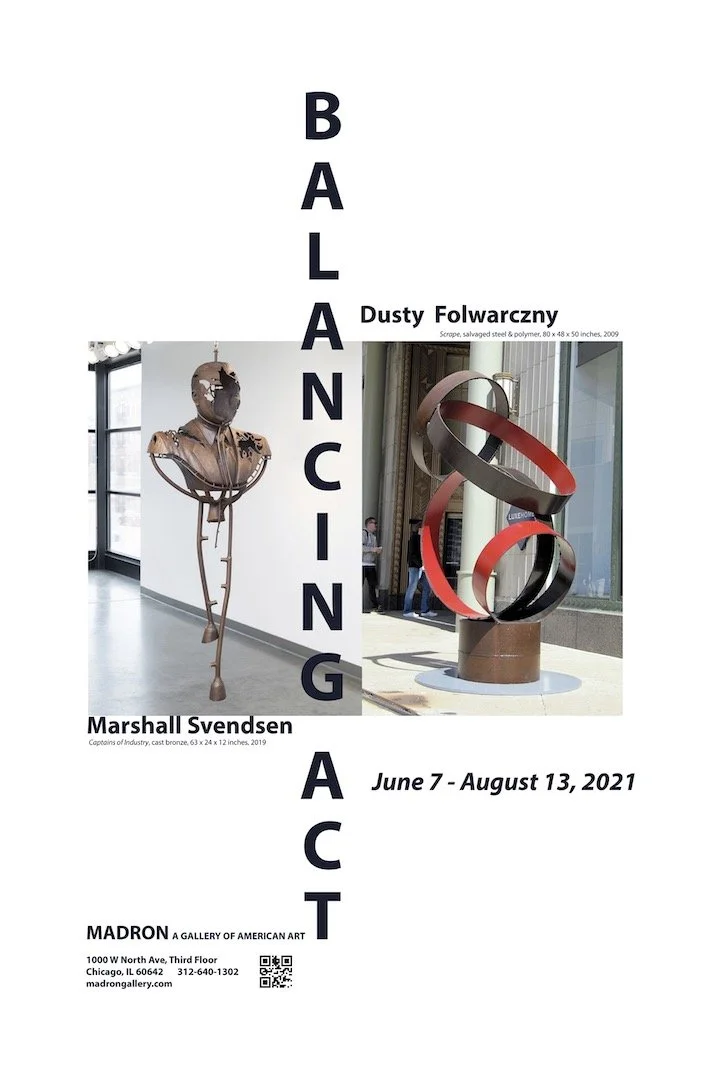
Chicago, IL – Madron Gallery is pleased to present Balancing Act, a dual exhibition of contemporary sculptures created by Chicago artists Dusty Folwarczny and Marshall Svendsen. This marks Folwarczny’s second exhibition and Svendsen’s first with Madron Gallery.
Balancing Act will be on view June 7 through August 13, 2021, with sculptures on display both in Madron Gallery and outside around the corner from the gallery, at 1750 N Kingsbury, Chicago, IL 60614. For details about the Artists’ Reception, please contact the gallery at info@madrongallery.com.
Exploration of materials, memories, and environments are common themes found throughout both Folwarczny and Svendsen’s work. Folwarczny creates experiments in physics — cylinder steel sculptures consisting of salvaged metal forms, welded together like pieces of a puzzle; the raw textured surface of metal and the aesthetic of rust are often on full display. Each finished piece is a test of Folwarczny’s hypothesis of how far she can push the limits of space, balance, and gravity.
Svendsen’s sculptures are his own unique visual language, created by combining found objects with the classic lost wax process of casting bronze. Twisted and broken industrial forms are visible through the smooth surface of the bronze metal, the organic form of the human figure — alongside fragments resembling pieces of preserved earth, bone, and rock — is meshed with a colder technological aesthetic. Each piece appears to be of another world, like characters in a story, or parts of a dream that can’t fully be remembered.
Dusty Folwarczny received her BFA in Sculpture from Truman State University. She has served as President of Chicago Sculpture International and on their Board of Directors since 2009 and is now an Emeritus member. Her work has been exhibited at Elmhurst Art Museum, IL, Art Chicago, EXPO Chicago, Willis Tower, Bridgeport Art Center, Krasl Art Center, MI, Ukrainian Institute of Modern Art, and numerous public art exhibitions. Her sculptures can be found in the permanent collections of the Village of Skokie, IL and the Sculpture Trails in Solsbeery, IN.
Marshall Svendsen received his BFA from the School of The Art Institute of Chicago in 2004, with an emphasis in sculpture, mold making and casting metal. In 2006, he founded True Form Productions, a fine art bronze foundry, and has cast bronze sculptures for artists including Rashid Johnson, Nick Cave, Preston Jackson, and Virginio Ferrari. Through True Form Productions Svendsen has produced memorial bronze statues for The Chicago Fire Department, and has worked with institutions such as The Field Museum, Lurie Children's Hospital of Chicago, The Illinois Historic Preservation Agency, and received a Proclamation from Illinois Governor Pat Quinn thanking him for his work restoring Abraham Lincoln’s Tomb in Springfield, IL. His work has been exhibited at Heaven Gallery, Chicago, IL, SOFA Chicago, Art Chicago, Purdue University, Cliff Dwellers Club, Chicago, IL, The Bridgeport Art Center, and The Evanston Art Center.
Spring and Weird People
March 8 - April 30, 2021
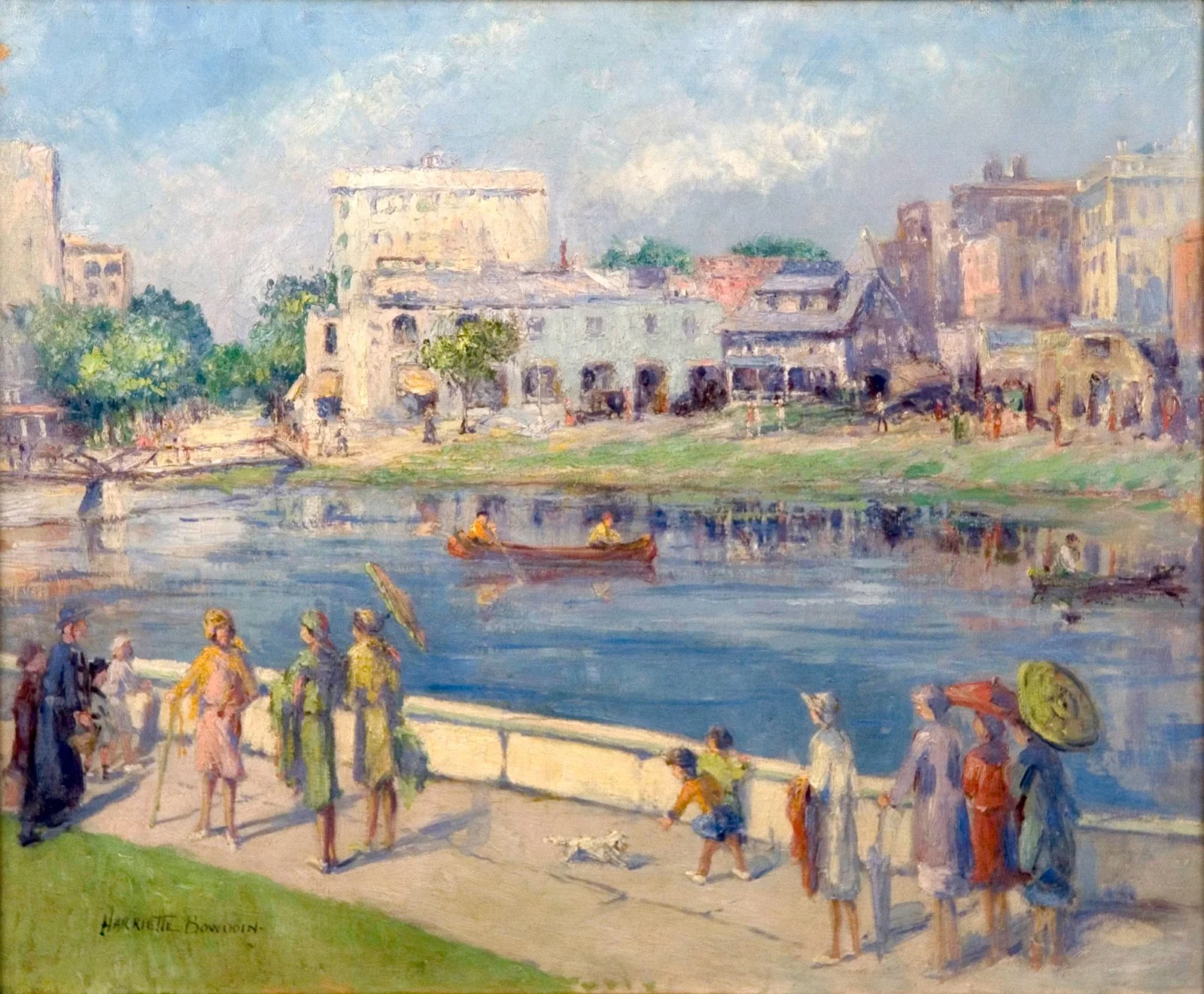
The snow has melted, the days are longer, and you can feel the changing seasons in the air. Currently on view in the Blue Gallery – Spring and Weird People celebrates the rebirth and new beginnings that springtime promises, with lush landscapes of budding trees, riverbeds, and muddy fields alongside artistic interpretations of the human character by Ashcan, Contemporary, Impressionistic, Regionalist, and Social Realists artists.
Exhibiting Artists: Oscar Bluemner (1867 -1938), Aaron Bohrod (1907 -1992), Harriette Bowdoin (1880 – 1947), Karl A. Buehr (1866 - 1952) , Theodore Earl Butler (1861-1936), Robert Hartley Cameron (1909 – 1998). Michel Ciry (1919 – 2018) , Dusty Folwarczny, Edmund Greacen (1877 -1949), Paul Guiramand (1926 - 2008), Terrence Karposwicz (b. 1948), Leon A. Kroll (1884 -1974), Jack Levine (1915 -2010), Harriet Randall Lumis (1870-1953), Reginald Marsh (1898 – 1954), Lawton Parker (1868 - 1954), Louis Ritman (1889-1963), Edgar Rupprecht (1889 - 1954), William S. Schwartz (1896 - 1977), Everett Shinn (1876 – 1953), George Henry Smillie (1840 -1921), Moses Soyer (1899 -1974), Raphael Soyer (1899 -1987), Eric Stephenson, Robert Vonnoh (1858-1933), and Chuck Walker (b. 1951)
Casting Call: Women in Bronze from Art Nouveau to Art Deco
January 25 - March 26, 2021
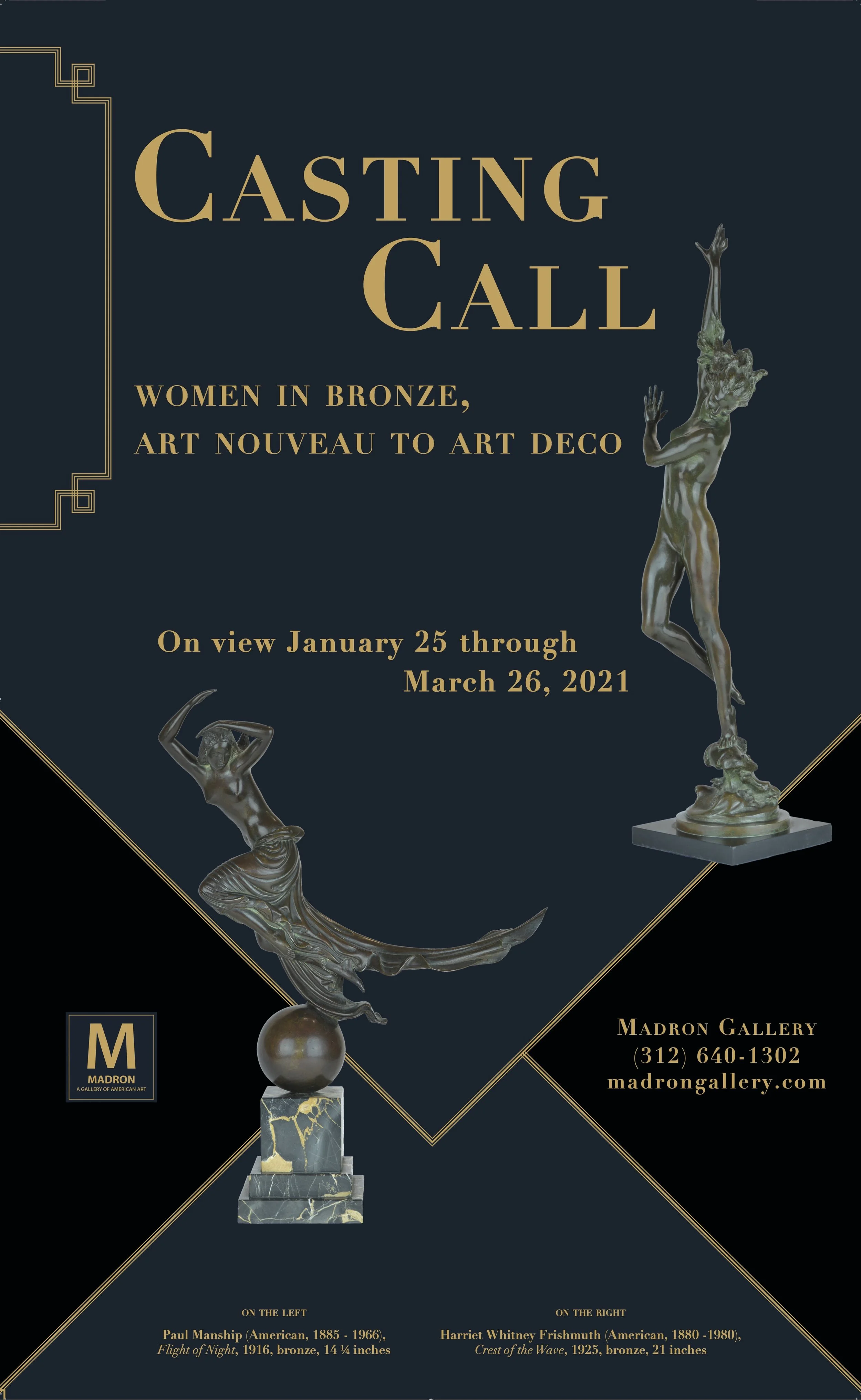
Casting Call: Women in Bronze from Art Nouveau to Art Deco explores bronze depictions of the female figure in the transitional period from just before to just after World War I. Sculptures by Paul Manship, Bessie Potter Vonnoh, Harriet Whitney Frishmuth, and more reveal the tensions between the two artistic movements — Art Nouveau a reaction to the Industrial Revolution, Art Deco to World War I — as sinuous, organic lines gave way to more streamlined forms.
On view from January 25 through March 26, 2021, these bronze statues were created by American artists who brought the influences of European, particularly French sculpture and design to America. Throughout history, bronze as an art form has fallen in and out of fashion. Political and industrial developments of the 19th and 20th centuries, eventually lead to the popularity of bronze statuettes as domestic ornaments in parlors all across America.
The Industrial Revolution provided the tools necessary to make bronze sculpture available in editions. Foundries sprang up in the city of Paris whose sole purpose was to cast editions of sculptures, allowing hundreds of artists to get specialized in bronze. Artists from other nations flocked to Paris in order to study the technique.
Between 1850 and 1900, the development of specialized foundries and the proliferation of trained labor and equipment enabled sculptors to work on their native shores rather than abroad. By 1900, Roman Bronze Works Foundry, NY was the first in the US to specialize in the lost-wax casting process, which allowed a more precise replication of textural detail, the capacity for greater experimentation with complex compositions, and the ability to cast works in single pieces rather than assembling parts into a whole.
Following the First World War, the number of foundries increased due to the expanding demand for bronze statues required for war memorials all across Europe. Artists began experimenting with the material, using new techniques such as the lost-wax casting process - testing to see if bronze as a medium would meet their artistic visions.
As artists became more comfortable working with bronze, compositions became more complex and bold, organic forms of Art Nouveau morphed into the sleek structured forms of Art Deco, and patrons eagerly purchased fountain and parlor pieces through galleries and exhibitions, bronze showrooms such as Tiffany & Co. and Gorham, and of course through the foundries and sculptors themself.
Second Impressions: Revisiting the Paintings of Robert Vonnoh
September 8 - November 25, 2020
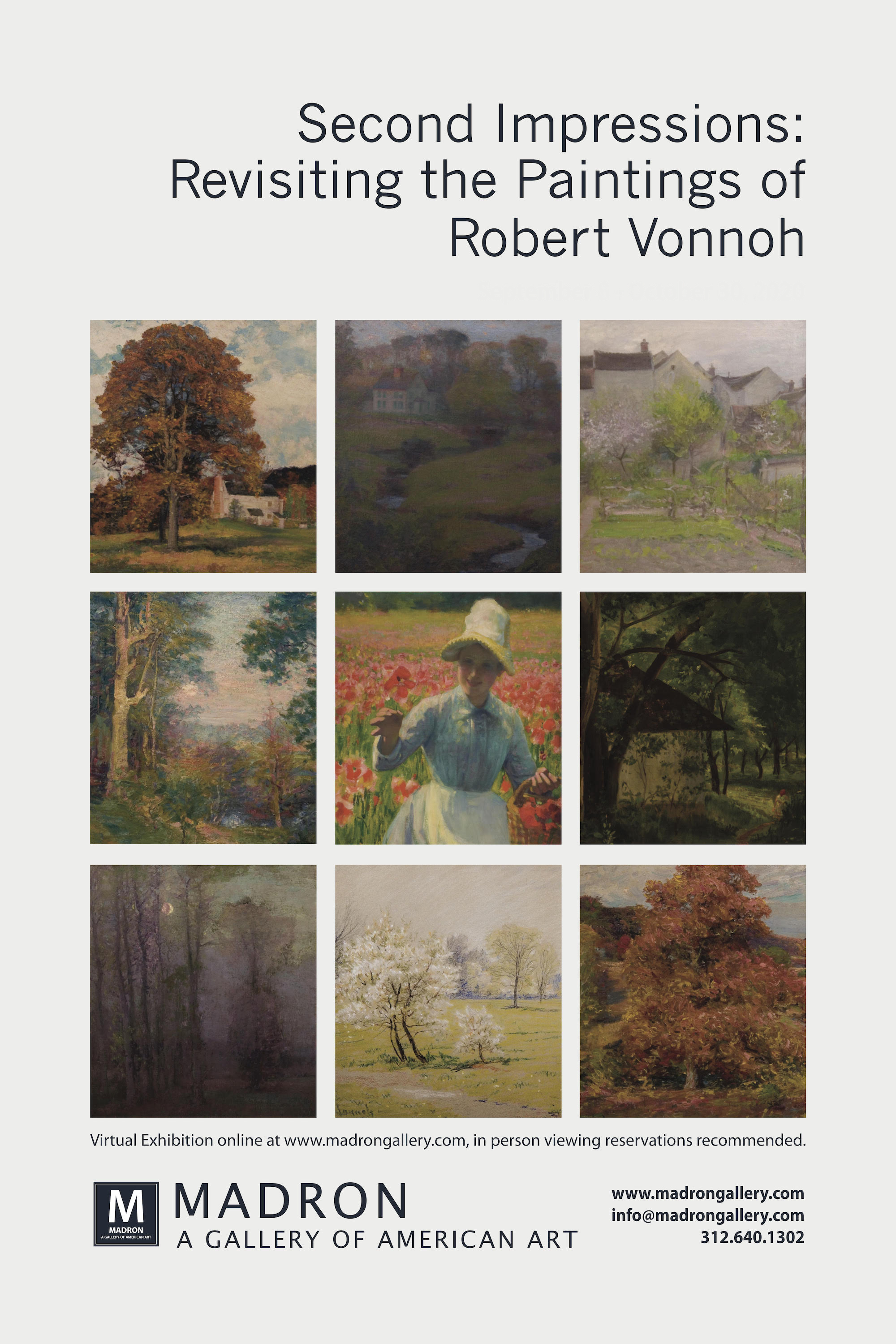
CHICAGO, IL – Madron Gallery presents Second Impressions: Revisiting the Paintings of Robert Vonnoh, on view September 8 through November 25, 2020. One of the earliest practitioners of Impressionism in America, Robert Vonnoh was a brilliant colorist, portraitist, and influential teacher; he is also an artist often overlooked. In 2010, Madron Gallery — in partnership with the Butler Institute of American Art, along with the assistance of multiple private collections — organized the retrospective Robert Vonnoh: American Impressionist. The exhibition highlighted Vonnoh’s dual modes of painting, landscape and portraiture, as well as his evolution as an Impressionist painter.
Ten years later Madron is taking another look at Vonnoh, this time focusing on his American landscapes created in and around the artist colony of Lyme, Connecticut, while also highlighting his French landscapes and the portraits that made him famous. Vonnoh’s canvases explore the calm poetry of rural summers and New England falls with raw, brilliant colors and broad strokes of the pallet knife. Moonlight and dusk are portrayed with the signature muted violets and lavenders of Impressionism, while vibrant pinks, reds, yellows, and oranges capture the beauty of sunlight reflected on foliage in the height of autumn.
Art historian Wendy Greenhouse, PhD discusses Vonnoh’s career and many of the paintings now on display at Madron in the 2010 catalog Robert Vonnoh: American Impressionist now available online from Madron Press and on Amazon.com. Read it to learn more about Vonnoh’s life, career, connection to Chicago, and his full exhibition history.
Scrapbooking the Collection
A virtual exhibition highlighting paintings from Madron Gallery
June 12 - August 28, 2020
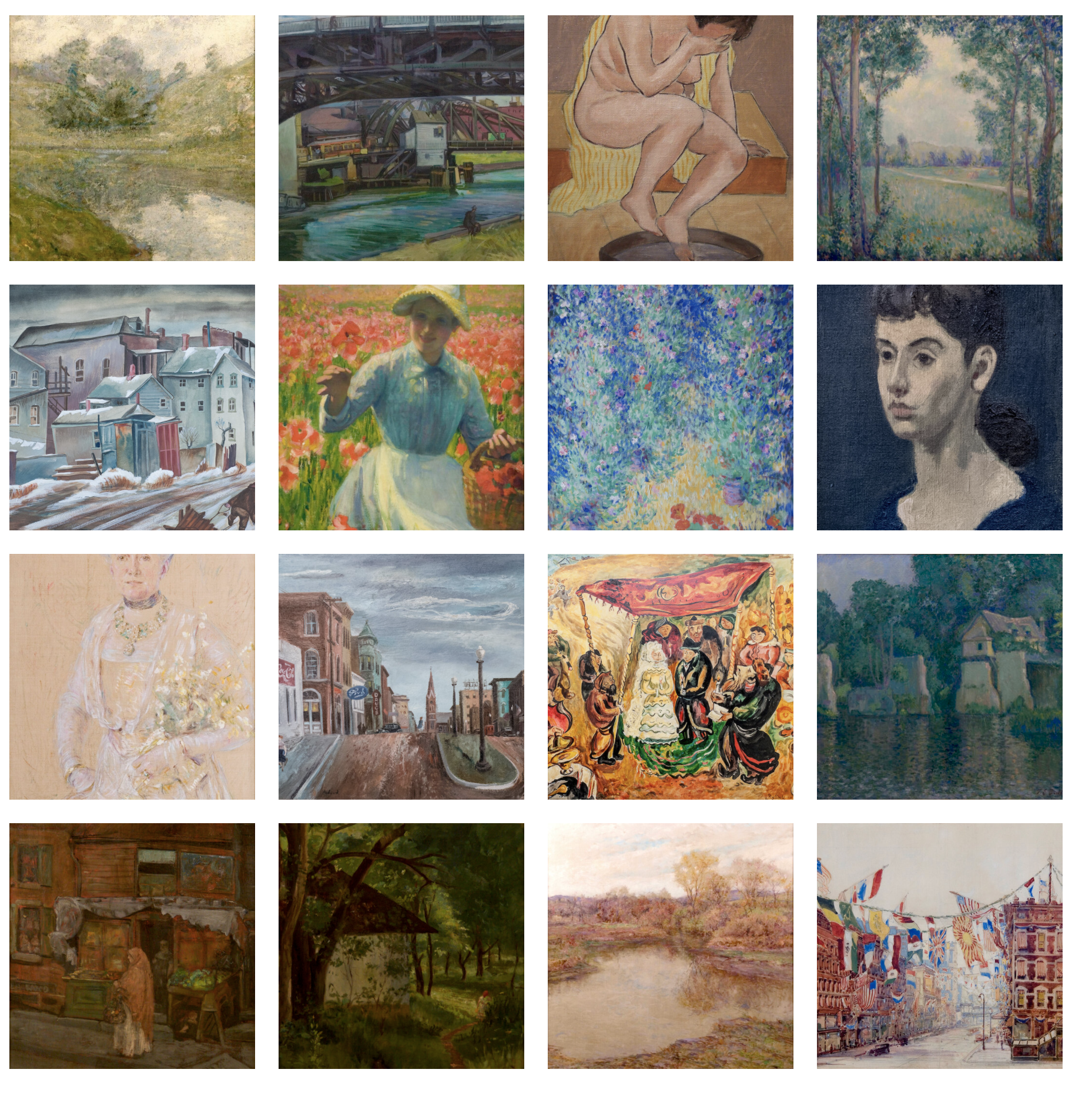
Throughout the course of art history, artists have used their talents to reflect and comment on the values and events of the day. In Scrapbooking the Collection, the romance, idealism, soft palettes, and fleeting brushstrokes of American Impressionism are paired with the vibrant colors, bold lines, street scenes, and workaday people captured by Social Realists, Regionalists, and other artists under the Modernist umbrella.
Together these sixteen artworks highlight a small percentage of Madron’s collection, encompassing a 60-year span of landscapes and portraiture that shaped the American art canon.
Join us as we jump back and forth in time and place, exploring these hidden gems of the collection. For more information about a particular artist or work, please contact us at info@madrongallery.com.
PASSION AND FANTASY THROUGH THE PHOTOGRAPHIC LENS
February 7 – 21, 2020
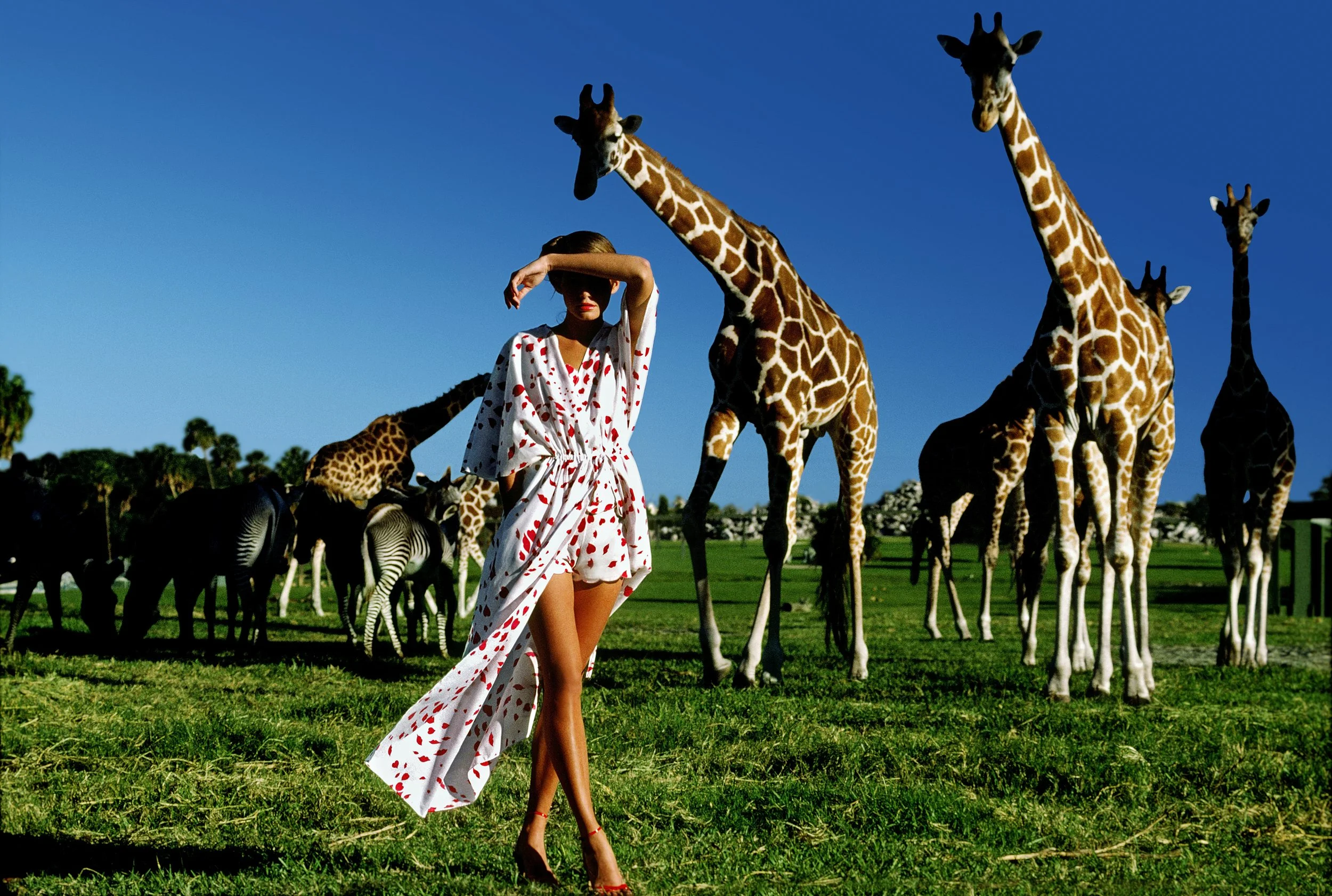
CHICAGO, IL - Madron Gallery presents Passion and Fantasy through the Photographic Lense, now on view through February 21, 2020. Three different generations of photographers – Stan Malinowski (b. 1936), Marc Hauser (1953 - 2018), and Nicholas Azzaro (b. 1982) — explore the 1980s, capturing fashion, travel, and human fantasies.
The 1980s was a decade with the mindset of more is more. It was an eclectic time, especially for fashion, featuring bold styles, colors, and accessories. After working as an in-house photographer for Playboy, Stan Malinowski captured the birth of the "supermodel", photographing models that defined the decade such as Andie MacDowell, Iman, Christie Brinkley, and Janice Dickinson. Using both color and black and white film, Malkinowski creates images of pure passion and fantasy with dramatic landscapes, wild life, big cities, color, and the female form.
Nicholas Azzaro, inspired by Malinowski’s work, captures a contemporary interpretation of 1980s fashion photography. Layered belts, chunky jewelry, tracksuits, spandex, miniskirts, high heels, and fur are on full display with dramatic lighting, mixed with monochromatic backdrops in the studio and abstract and bold street scenes. Azzaro’s photographs are a sweet valentine to the bold fashion of the 1980s.
At the age of 13, Marc Hauser received his first Brownie camera. Soon after, his natural talent was discovered, leading to an apprenticeship at Playboy magazine at the age of 14. Known for his black and white commercial photography of celebrities such as Patti Smith, John Mellencamp, and Michael Jordan, as well as his flamboyant personality and brazen self-promotion, Hauser’s nostalgic perspective of Cuban life in the 1980s explores a softer, quieter side of the photographer. Photographed during a time when US citizens were not allowed to visit Cuba, Hauser’s street photography with its sepia toned prints capture a forbidden culture and its people. Intimate in nature the photographs express a range of emotions including joy, romance, nostalgia, longing, comedy, and sadness.
Madron Gallery proudly offers an extensive inventory of American paintings, drawings, and prints from 1890–1940, as well as a collection of modern and contemporary art from local artists.
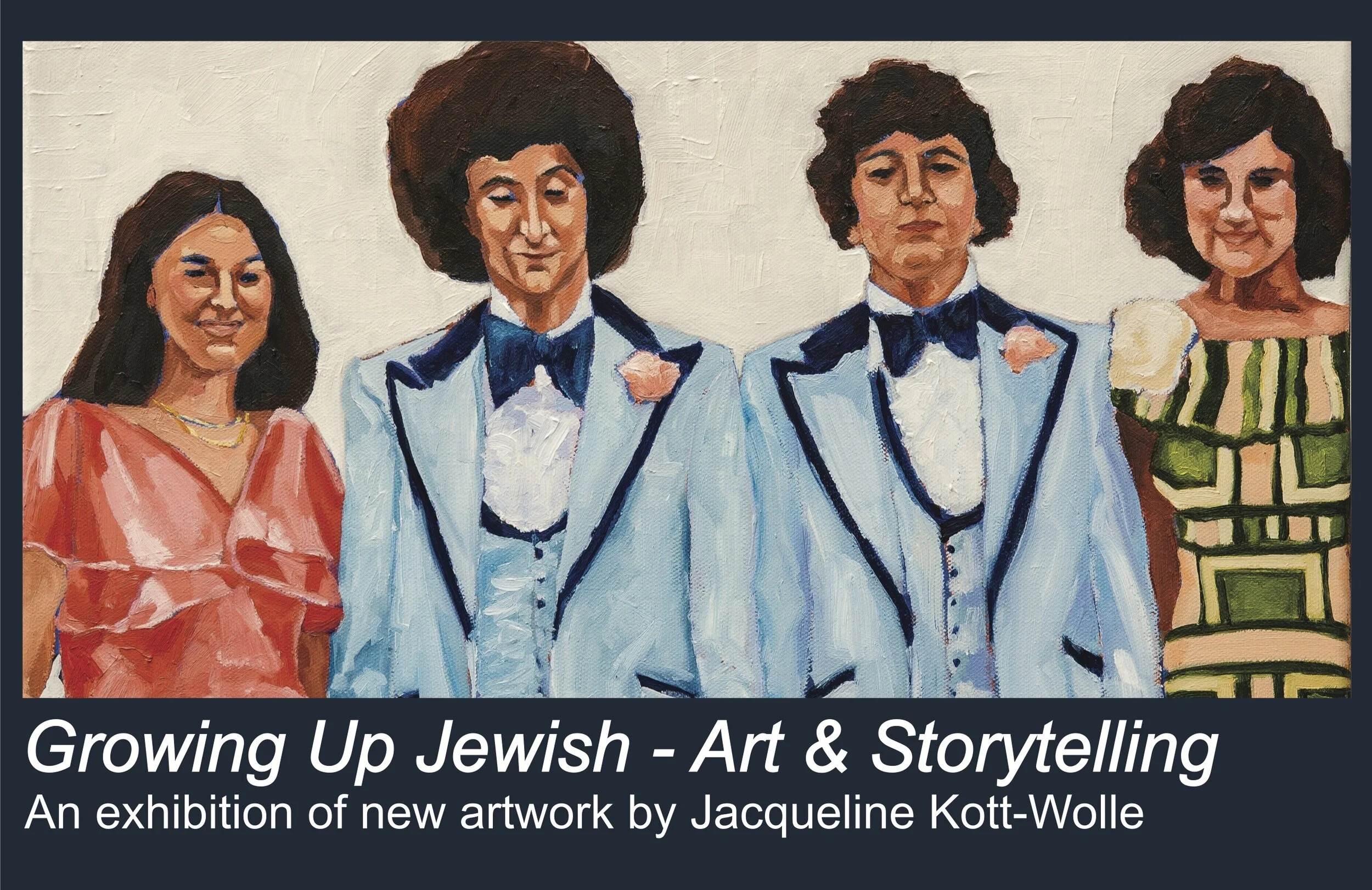
GROWING UP JEWISH - ART & STORYTELLING
An exhibition of new artwork by Jacqueline Kott-Wolle
October 28, 2019 - January 17, 2020
Artist Talk: Sunday, November 3, 2019, 12:30 PM
In this exhibition, Kott-Wolle asks, “What does it mean to be Jewish for past, present, and future generations?” Through nostalgic paintings of four generations of her friends and family, Kott-Wolle explores her faith and heritage, curating images from cherished family scrapbooks that address her experience as a North American Jew born in the mid-20th century. Rituals and traditions that helped shape her identity are brought front and center in these works, paired with the artist’s own narration of the people and events represented.
Jacqueline Kott-Wolle was born and raised in Toronto, Canada. A trained social worker with an MSW specializing in Community Development and Social Planning, Kott-Wolle has dedicated the last ten years to her art practice, focusing on both landscapes and capturing precious family moments. In the last four years her work has been exhibited at The Art Center Highland Park, Deerpath Art Center, and North Shore Art League, and can be found in private collections in the Chicagoland area; Toronto, ON; Muskoka, ON; Milwaukee, WI; Boca Raton, FL; Nantucket, MA; Kiawah Island, SC; and Raanana, Israel.
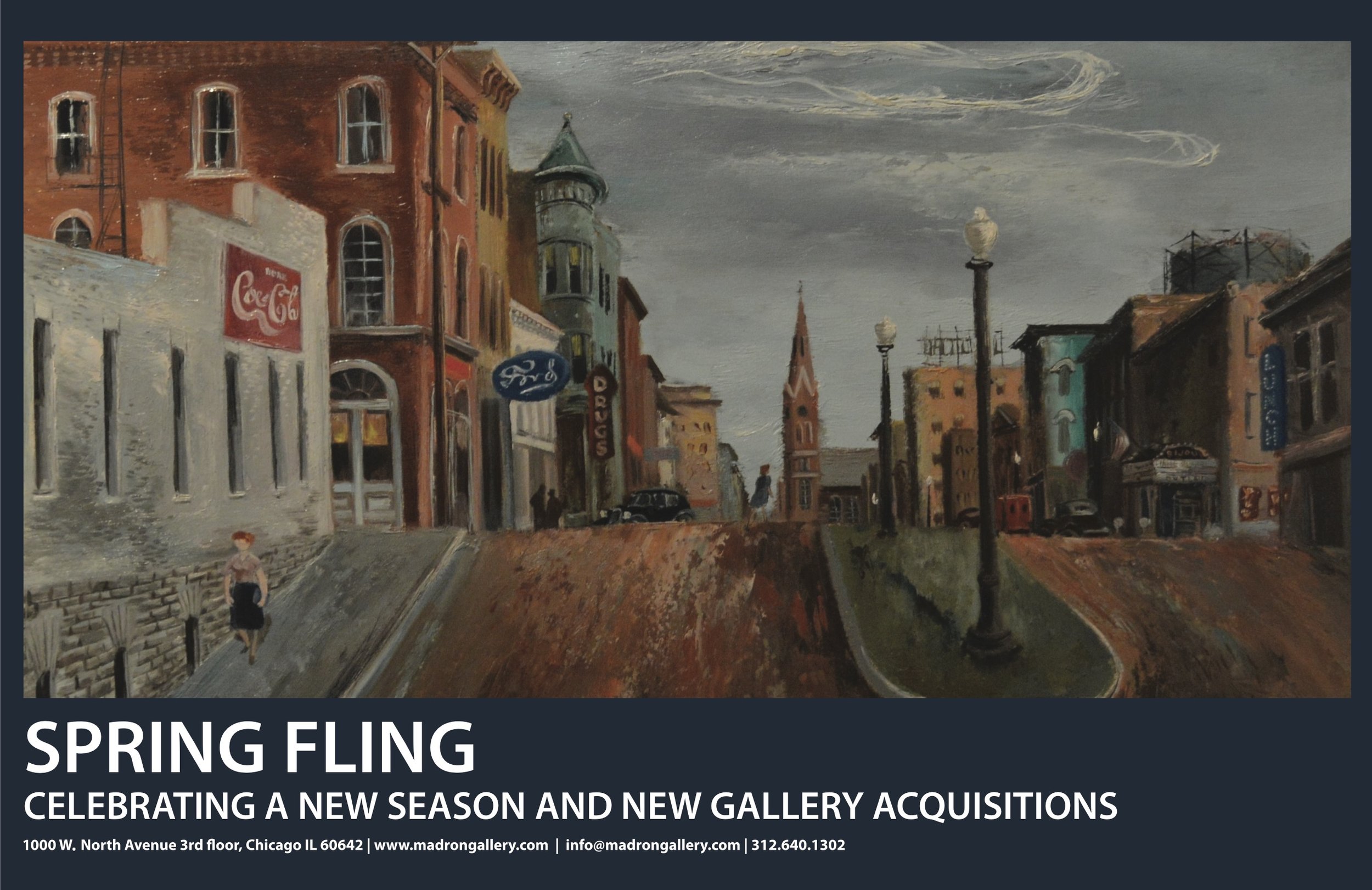
SPRING FLING
Celebrating A New Season and New Acquisitions
April 1- June 28, 2019
Featured artists include Twachtman, Butler, Bohrod, Schwartz, Evergood and many others!
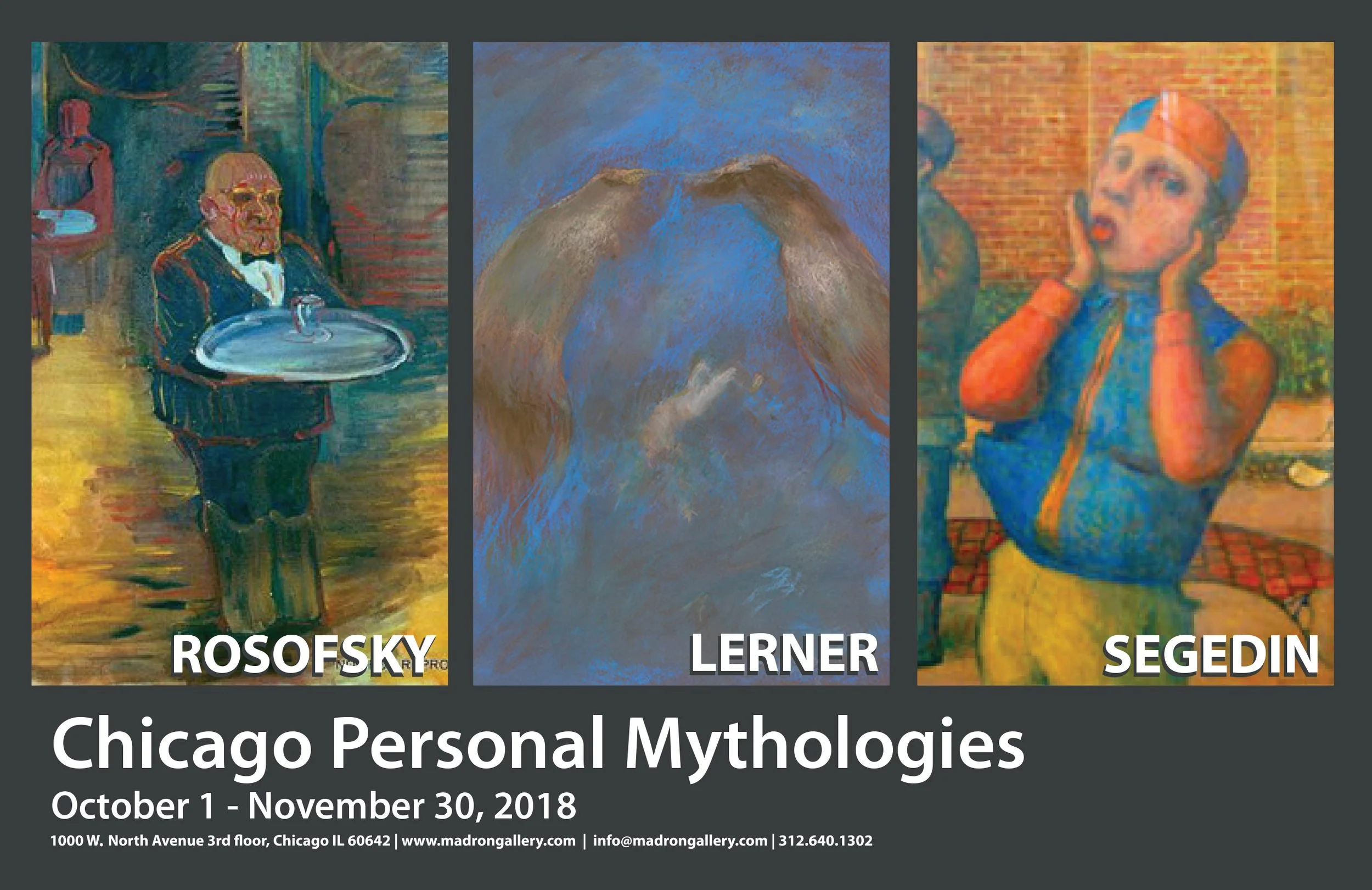
CHICAGO PERSONAL MYTHOLOGIES - An Exhibition of Paintings
ARTHUR LERNER SEYMOUR ROSOFSKY LEOPOLD SEGEDIN
October 1 - November 30, 2018
Madron Gallery's exhibition “Chicago Personal Mythologies” includes works by three Chicago artists: Arthur Lerner, Seymour Rosofsky and Leo Segedin.. All three artists offer vibrant yet complicated pieces that attempt to display one's personal mythologies. Madron's exhibition creates a world of fantasies and myths and presents three different perspectives on how humans interact with their surroundings and themselves.
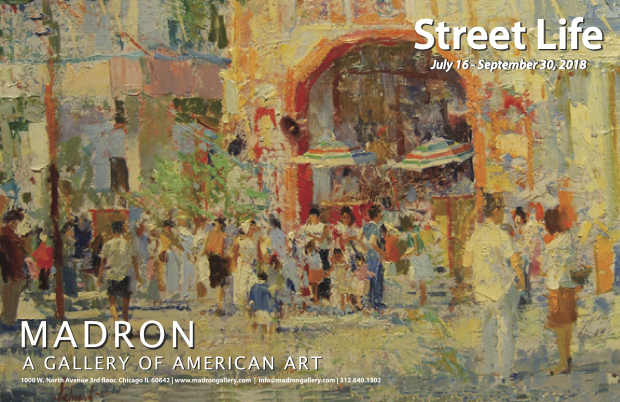
STREET LIFE
July 16 - September 30, 2018
PRESS RELEASE
Click to download a catalog of thumbnails.
Streets have been used as an outlet for public expression, a point of gathering, and most practically, a method to get from one destination to the next for centuries. Whether it be the streets of a small, rural town or a large, modern city, each thoroughfare embodies a unique character. Madron Gallery’s current exhibition, “Street Life,” expresses the diversity of life that can be found on streets across the world.
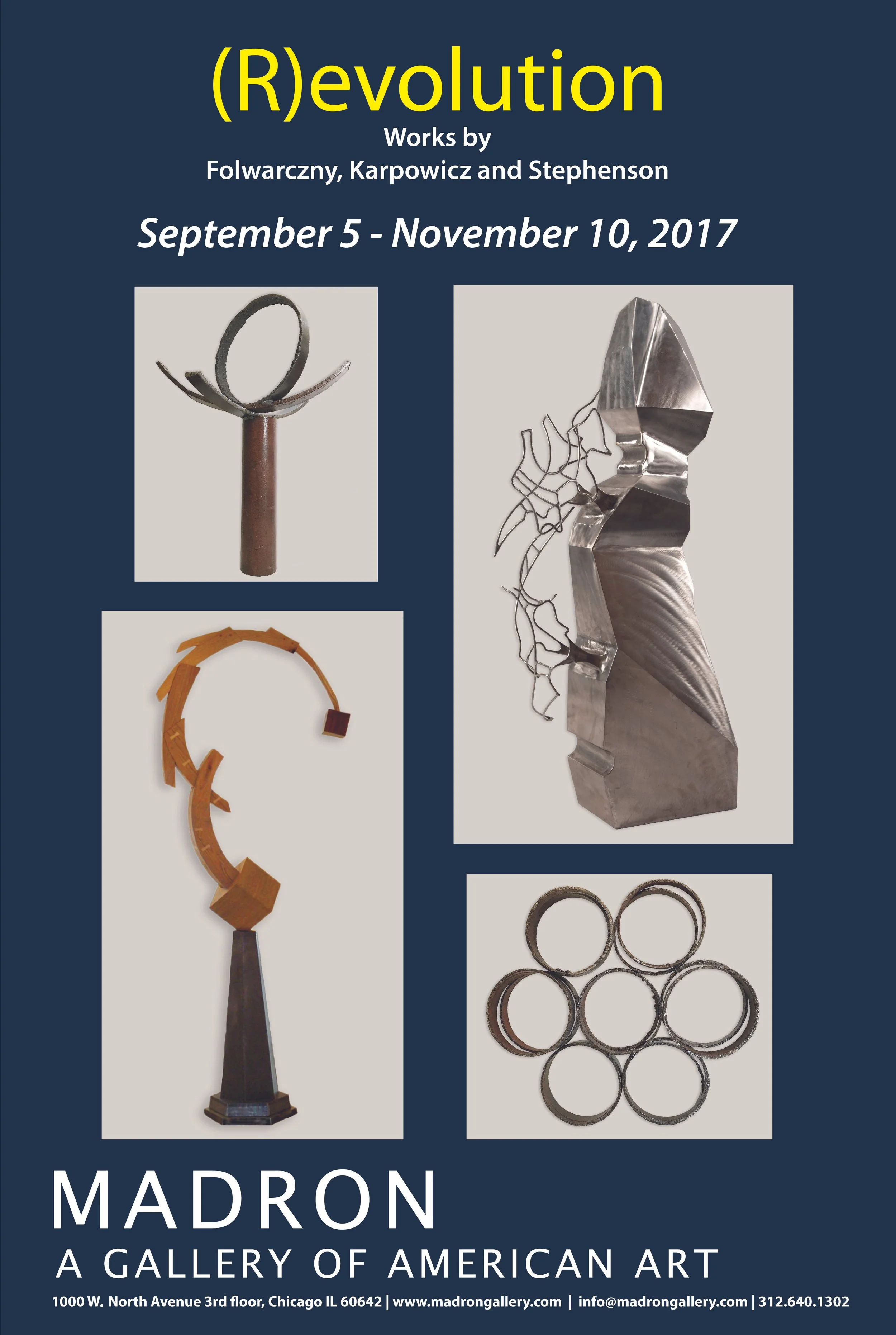
(R)evolution
DUSTY FOLWARCZNY TERRENCE KARPOWICZ ERIC STEPHENSON
September 5 - November 10, 2017
Come join Madron Gallery for an Artist Talk and Closing Party. The evening will include discussion by the artists regarding their creative process for the (R)evolution exhibit. We hope collectors, curators and the general public will gain a better understanding about each piece on exhibit and the artists in general.
One artist sees a scrap pile of steel and considers how to make something from nothing. Another finds creative inspiration through the observation of windmills and watermills. And a third creates works of art focused in part on the juxtaposition of the human form and technology.
All of these sculptors have their works on display at Madron Gallery’s current “(R)evolution” exhibition, which for the first time in Madron’s history is a sculpture-only show.
A common theme among the three featured sculptors is the projection of nature through man-made objects, including industrial materials like steel. Terrence Karpowicz, Eric W. Stephenson and Dusty Folwarczny, all of whom are based in Chicago, build sculptures that demand a view from every angle in works that evolve and communicate based on different lighting and perspectives. Their works carry weight, light and movement in multiple dimensions which change and develop with the motion of the viewer.
THREE ARTISTS, ONE SHOW
Painting Exhibition
June 1- July 31, 2017
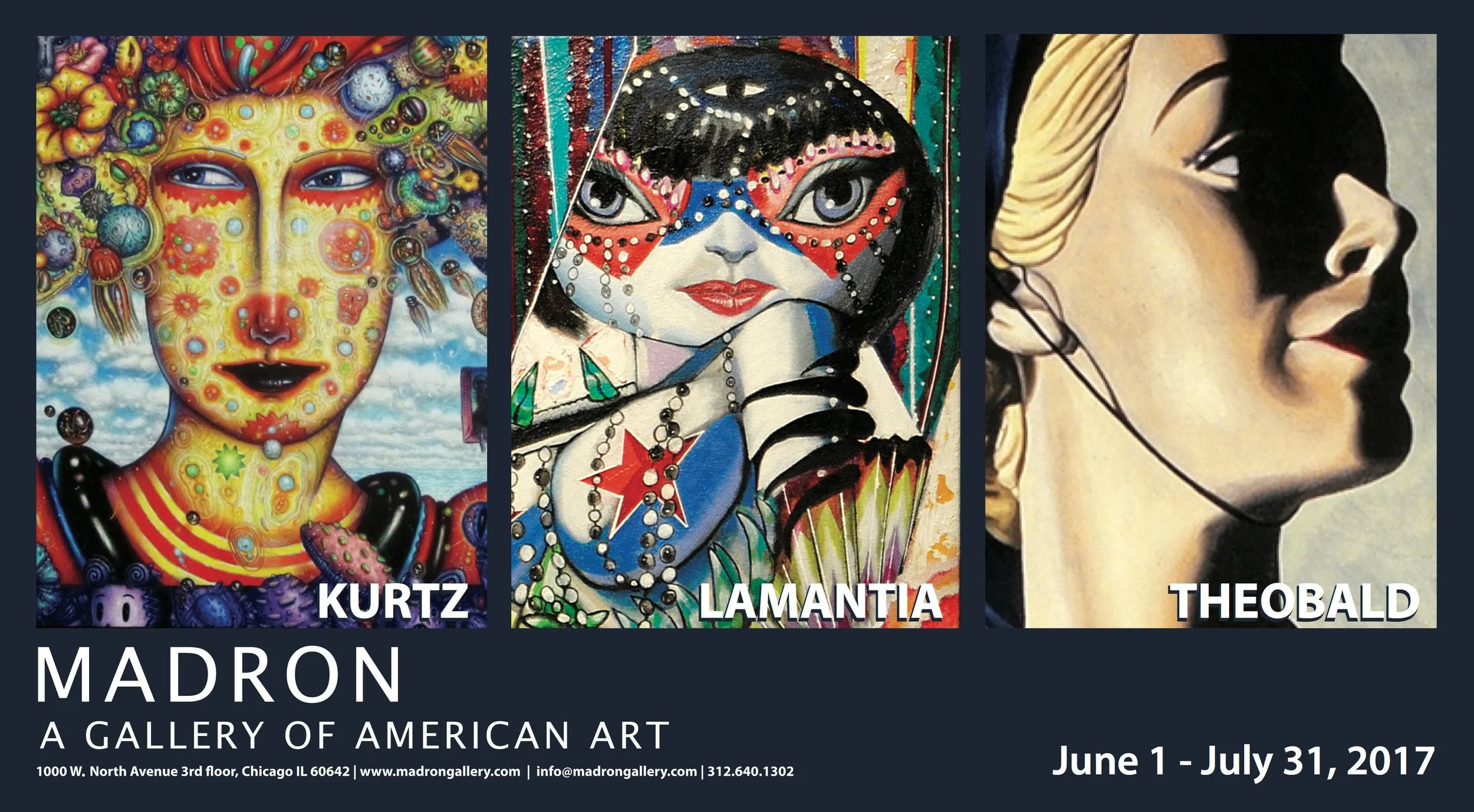
JOHN A. KURTZ, PAUL LAMANTIA, & MEL THEOBALD
John A. Kurtz, Paul Lamantia and Mel Theobald are MADRON GALLERY's featured artist this summer. Though their styles are very distinct, the three do have things in common, notably that they’re Chicagoans who came of age during the turbulent 1960s. Their art certainly reflects the excitement and individual thinking that took hold in that era. Kurtz, Lamantia and Theobald are also friends who’ve known each other a long time and studied at the Art Institute together. Their collective works, though varied and highly individual, share one important quality: Strength.
PERSONA
A Selection of Portraits and People
February 13 - April 13, 2017
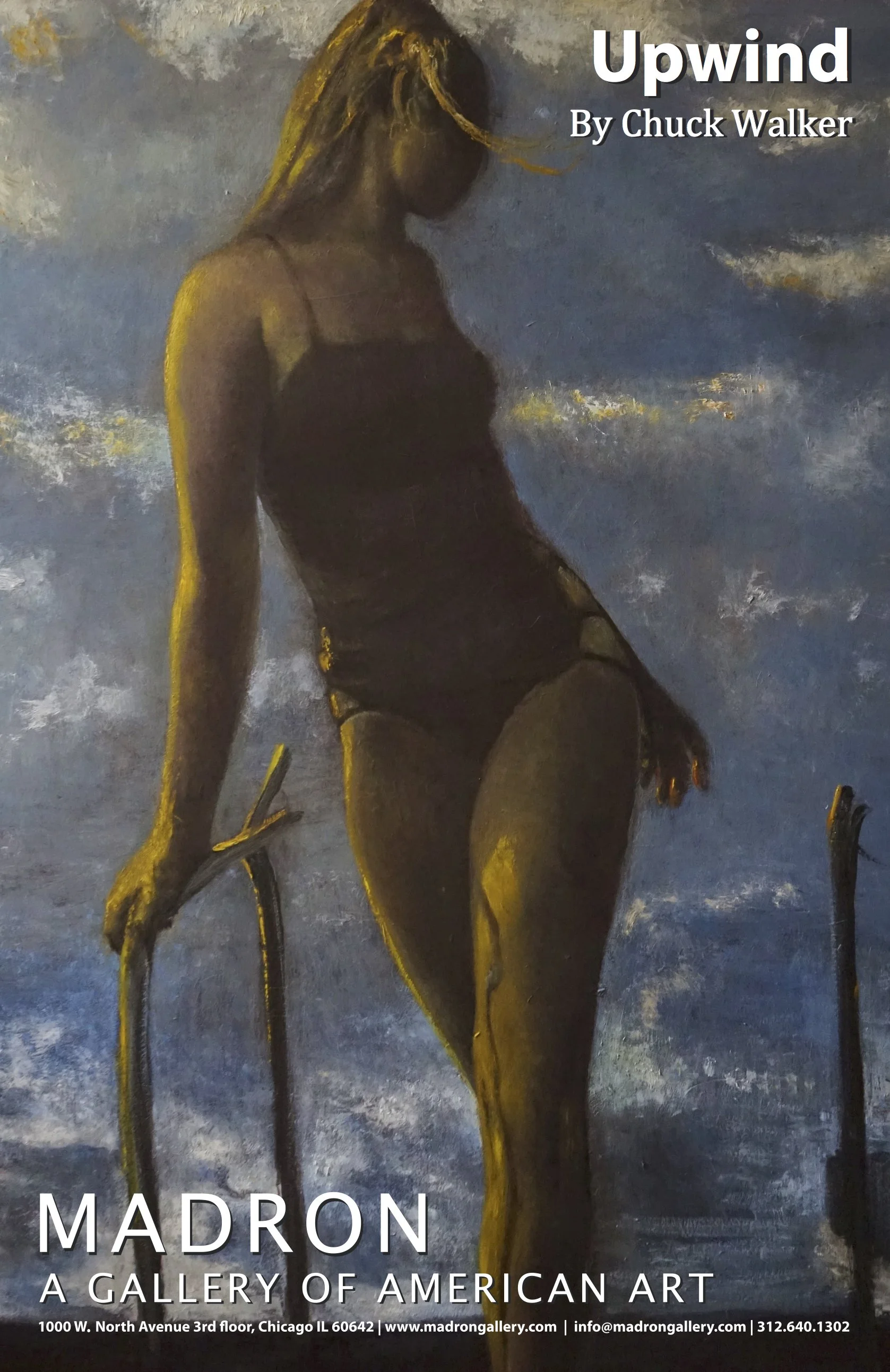
UPWIND
Paintings by Chuck Walker
June 1 – July 29, 2016
In the artist’s words:
“I am not a realist. My work has been described as psychological and emotional realism, but my work is more than that. It is thought symbolized into an icon, an idol. A pure image. I think of my paintings as road signs that mark out the directions and stops of my life as I go along. I have the need to paint like this.”
Chuck Walker’s work is reminiscent of 19th century French intimism. Walker’s paintings draw you in and work their magic on you almost in spite of yourself. The images are sensual and intimate without being erotic, almost intrusive. The paintings are encapsulated in layers; the colors are soulful and melancholy. The result is quiet, yet powerful. Often Walker doesn’t show the face of the subject. As Walker states, “As soon as the face enters in it gets more specific, like a portrait. People read the face.”
Chuck Walker originally attended the School of the Art Institute of Chicago from 1969-73. His works are in numerous private and public collections including the Museum of Contemporary Art (Chicago), Tampa Museum of Art (Florida), Contemporary Center for Art (St. Louis), Evanston Art Center (Illinois), and Artspace (San Francisco). Walker's work has been discussed and reviewed in Art News, New Art Examiner, Chicago Tribune, Chicago Sun-Times, NewCity and Art in America.

THE BORSCHT BELT
Revisiting the Remains of America's Jewish Vacationland
PHOTOGRAPHS BY MARISA SCHEINFELD
February 1 – March 31, 2016
From the 1920s through the 1960s, the Catskill Mountains of New York were a popular vacation destination for millions of Americans especially Jewish vacationers. Known as the Borscht Belt, the region combined recreational activities with nighttime entertainment, especially stand-up comedy, which was born in the region’s theaters and showrooms. Many of these entertainers became household names in American culture. At its peak the Borscht Belt was comprised of over 500 hotels and 50,000 bungalows. Photographer Marisa Scheinfeld has been documenting the dramatic degradation of some of the most famous Borscht Belt hotels and colonies. The images reveal ghostly remnants of the glory years of the era, as well as powerful evidence of nature's claim on the resorts and their landscapes, and new uses to which the spaces have been put in recent years. Scheinfeld, who grew up in the region, began her documentary photo project in 2010. In the fall of 2016, Cornell University Press will publish a monograph of Marisa's photographs on the Borscht Belt. An exhibition is now on view through March 31 at Madron Gallery in Chicago.
Click to download a catalog of thumbnails.
The Borscht Belt: Revisiting the Remains of America's Jewish Vacationland was developed & created by Yeshiva University Museum in NYC.
CUBA-1983
MARC HAUSER, VISIONS OF HIS CAREER
An Exhibition of Marc Hauser's Photography
October 1 - December 4, 2015
CUBA-1983
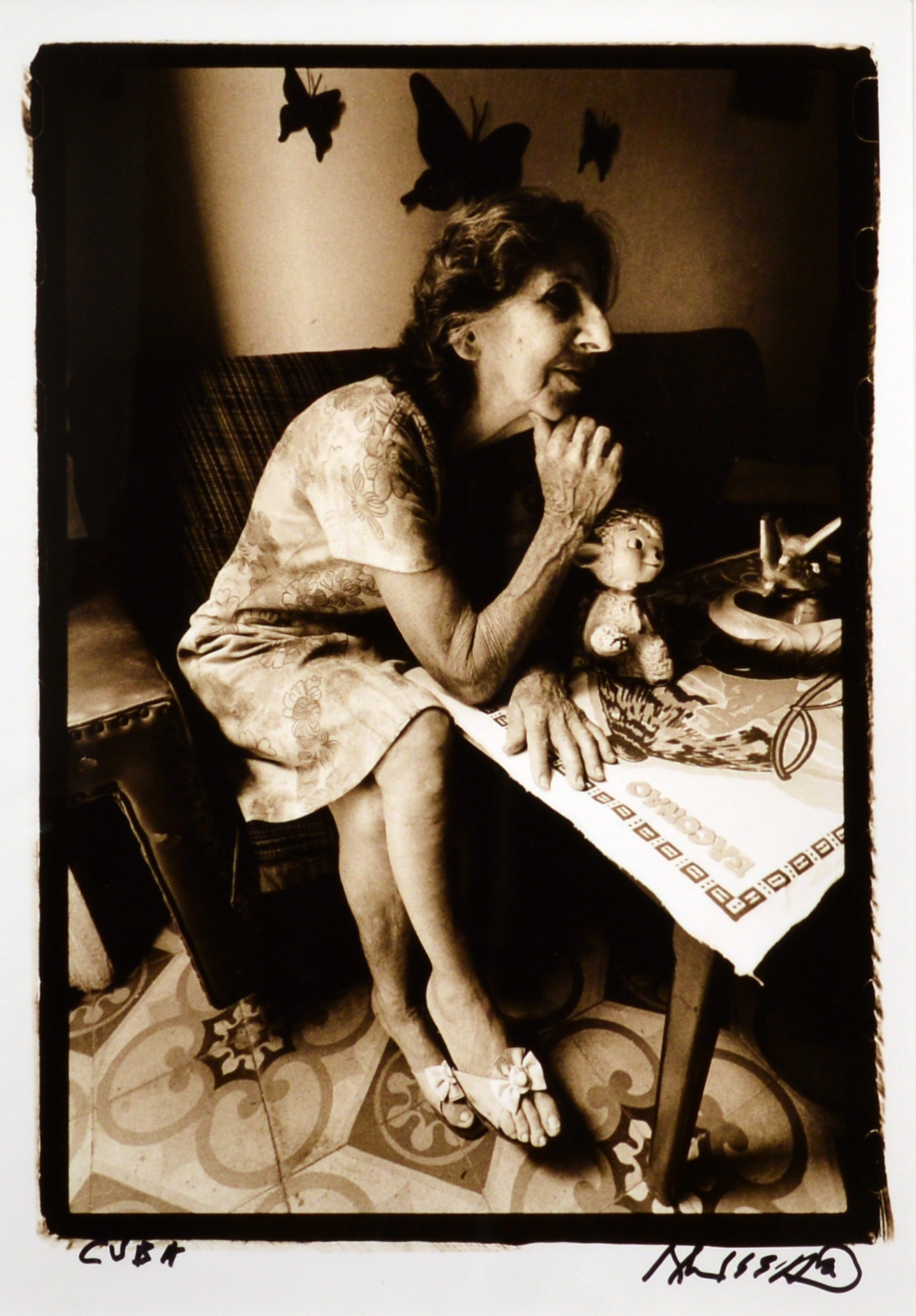
Feature a collection of pictures shot in Cuba that haven’t been seen since 1983, when a Chicago restaurateur hired Hauser to travel to the communist country and take photographs to be featured in a Cuban and cigar-themed restaurant. Because of severe travel restrictions imposed by both the United States and Cuban governments, he had to first fly to Mexico and obtain a Mexican passport, then take a Soviet airline from Mexico to Cuba. In Hauser’s own words: “When I got there, I stayed at the Hotel Nacional and spent a week in Havana taking photos of street scenes and the Partagas Cigar Factory, the most famous cigar factory in Cuba. We needed a tour guide to get around and secured one through Castro’s administration. I’ll never forget the guide telling us, ‘If you can’t speak Spanish, keep your mouth shut.’ I remember the poverty everywhere and no commerce.”
When Hauser returned to Chicago, he crafted four-by-six-foot silver prints from the negatives shot on the Cuban trip, and the photos were hung in the restaurant. After the restaurant closed in the mid-1980s, the whereabouts of those pictures became a mystery. The photographs in this exhibition were printed from the same negatives shot in 1983: this is the first public display of any of these images since the restaurant closed. These photographs serve as a post-revolution time capsule from our close neighbor to the south with whom we have had little contact over the last half century.
All of the Cuban pictures and most of Hauser’s classic images were shot with natural light or a single light source, but this alone is not what makes his photographs so compelling. As Hauser said in a 1985 Chicago Reader interview: “What makes my photographs is not the technical part. I’m no technician. What makes my pictures is me. People come in to see me, and I break down their walls. They open up and show that little sparkle in their eyes, or whatever’s in their eyes.” There is, indeed, much of Hauser in every picture he has taken, especially in these Cuban scenes.
SCENES OF AMERICAN LIFE
The second part of the show combs Hauser’s extensive archives for selected images from across America.
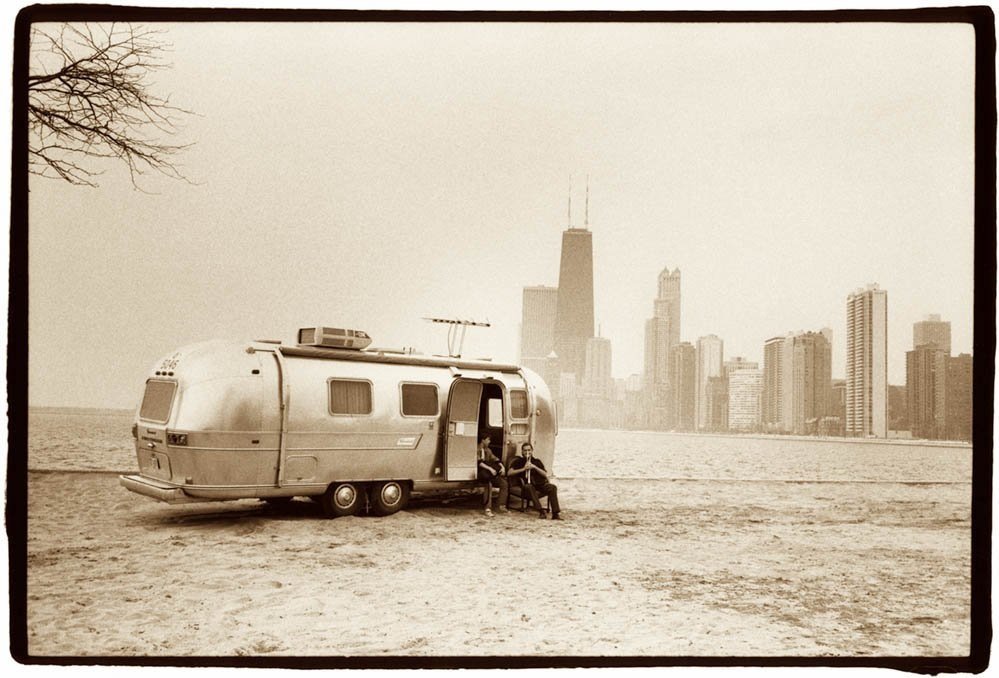
At about the same time he shot the Cuban pictures, Hauser was in the midst of photographing iconic scenes of American life that would showcase the materialistic transformations in our country during the 1970s and 1980s. Part of this series, his celebrity photographs always appear bright, fresh and personal. The Woody Allen image, for which Mr. Allen allowed Hauser to take only two shots and which ended up as a Canadian magazine cover, is a perfect example of the simplicity of natural light and showing Hauser’s gift of depicting a sitter’s inner soul. The pictures of rock singer John Mellencamp’s Scarecrow album cover were also shot in natural light at Mellencamp’s farm in Indiana over the course of a week. The penetrating portraits of singer Patti Smith were shot with a single light source and speak volumes about her offbeat character and her eccentric personality. His list of celebrity clients fill many pages.
Hauser is more than just a celebrity photographer. His photos of everyday people and everyday objects contain just as much intensity as his celebrity work. For instance, his portrait of an adolescent Boy Scout displays as much personality as a celebrity picture. The image of the old men on the boardwalk at Coney Island shows activity and communication in a still photograph. From this photograph we get a sense of Hauser’s ability to capture the essence of random people’s lives. There is a palpable sense of isolation in the picture of the Airstream trailer parked at the beach on a bright gray day, even with the Chicago skyline in the background. Hauser’s pictures of everyday street scenes also capture the personality of the moment even when they are void of human life.
Hauser is a master of natural and single-source lighting photography. Alfred Stieglitz, one of the pioneers in elevating photography to an accepted art form, frequently used natural or simple lighting and once wrote that in photography “there is a reality – so subtle that it becomes more real than reality.” We find that Hauser’s work frequently comes across as “more real than reality,” and trust that you will have a similar experience. It is our privilege and our pleasure to host this exhibition in our Chicago gallery.
Note: Images on this page may be cropped. This page and thumbnail contain only a partial sample of our Hauser inventory.
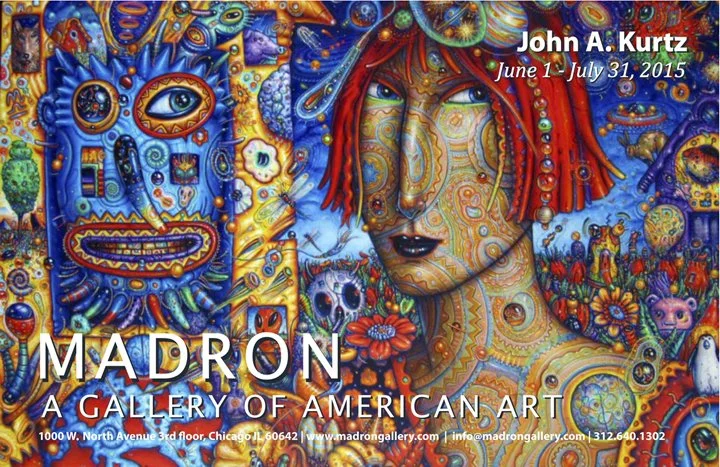
AN EXHIBITION: JOHN A. KURTZ
June 1 – July 31, 2015
The original paintings by John A. Kurtz are so full of detail that you can never seem to notice everything in one viewing. As a master of color and technique, Kurtz draws the viewer in through sheer intricacy, brilliant color and well-balanced compositional chaos.
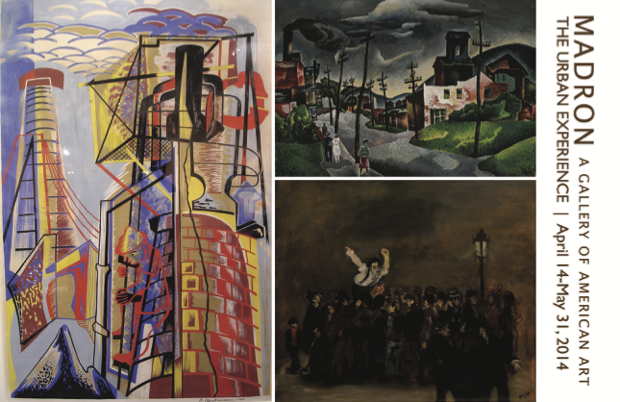
THE URBAN EXPERIENCE
April 14 through May 31, 2014
The center of civility in our society is not the small town but the big city, where you learn to thread your way through heavy traffic and subdue your aggressiveness and extend kindness to strangers.
Garrison Keillor
A Prairie Home Companion Jan. 12, 2010
According to a recent article in The New York Times, for the first time in recorded history most people on our planet live in cities. THE URBAN EXPERIENCE is a glimpse into the range and variety that city life offers both residents and visitors. This exhibition is but a small sample of city life in the first half of the twentieth century.
Thirty artworks depict cities are home to rich people and poor people and everyone in between. The contrast in subject matter and mood could not be more conspicuous than considering the Park scene on a spring day by Harriette Bowdoin with the misery in Reginald Marsh’s Bowery scene. Bernece Berkman gives us an industrial scene rendered in bright happy colors while Herman Menzel displays nothing but grime and gloom in his picture of Cal-Sag harbor. The serene gentility visible in Colin Campbell Cooper’s depiction of Hunter College is in sharp contrast to Jerome Myers Houston Street with a single woman walking to market on the lower East Side. A wide range of styles are evident during this period. Consider that Louis Lozowick’s modernist 57th Street (Rubber Center) and Harry Sternberg’s Elevated Platform were created at the same time.